your easy NSB game plan
Plan Your Visit to New Smyrna Beach
Getting here is simple, the pace is easy, and a little planning goes a long way. Here is the practical stuff — how to arrive, where to park, when to come, and what to bring.
Plan-Ahead Quick Facts
WhereCentral east coast of Florida, Volusia County — Atlantic on one side, Indian River Lagoon on the other
Nearest big airportOrlando (MCO), about an hour; Daytona Beach (DAB) is closer at ~25 min
From I-95Exit 249 to SR-44 east, straight into town and over to the beachside
Area code / ZIPs386 · 32168, 32169, 32170
Best weatherFall and spring — warm, sunny, lower humidity
VibeWalkable beach town: two main districts, miles of sand, a real arts scene
Getting Here
By car
Most visitors arrive on Interstate 95 and take Exit 249 for SR-44 (E. Howland Blvd / Lytle Ave) east. SR-44 carries you through downtown, over the North Causeway, and onto the beachside. From Orlando, US-92 and I-4 to I-95 is the common route; from the south, US-1 hugs the lagoon through Edgewater and Oak Hill.
By air
Daytona Beach International (DAB) is the closest at roughly 25 minutes. Orlando International (MCO) is about an hour and has the most flights and rental options. Orlando Sanford (SFB) is another mid-size option. Rideshare and rental cars are the easiest way in; the town itself is best explored by car with plenty of walking once you park.
Getting around town
New Smyrna Beach is compact. You will likely drive between the two main hubs — Flagler Avenue on the beachside and Canal Street downtown — then park and walk each district. Bikes, golf carts (where permitted), and rideshare all work well for short hops. See the Neighborhoods guide to map your days.
Parking & Beach Access
Quick version: to drive or park on the sand you need a Volusia County / Park Volusia pass (residents register free; visitors pay a daily or annual fee). To use a city beachfront lot you pay a separate ~$20 daily fee or use an NSB permit. There are also 60+ county off-beach lots and several boat ramps. Full details, hours, ramps and the lifted-vehicle rule are on the Beaches page.
Best Time to Visit & Weather
Fall (Sep–Nov)
Many locals' favorite season: warm water, fading crowds, lower humidity and gorgeous light. Hurricane season runs through November, so keep an eye on forecasts.
Winter (Dec–Feb)
Mild and sunny by northern standards (often 60s–70s°F), cooler water, and the peak of the art-festival season. Great for walking, history and downtown events.
Spring (Mar–May)
Arguably the best all-around stretch — warm, dry-ish days, big event calendar, and comfortable beach weather before summer heat.
Summer (Jun–Aug)
Hot and humid with near-daily afternoon thunderstorms that usually pass quickly. Warm Atlantic water, long beach days, and sea turtle nesting season (roughly May–Oct) — respect marked nests and lights-out rules.
Traveling With…
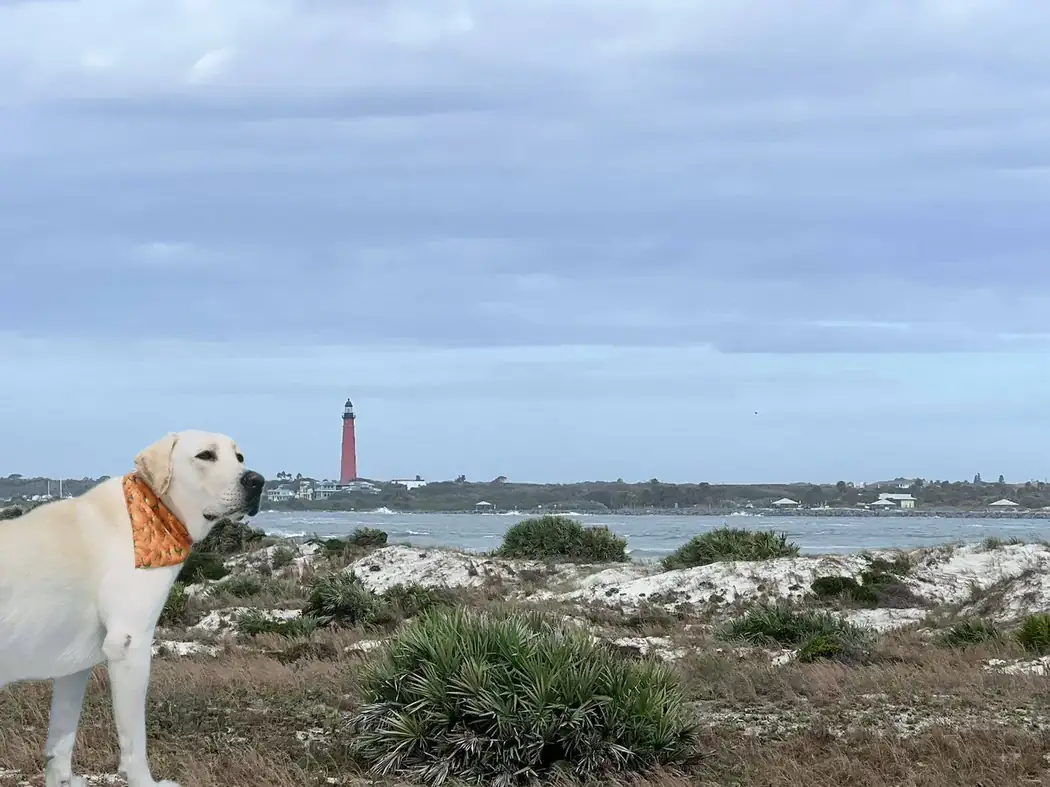
Your Dog
New Smyrna Beach is dog-friendly with rules. The standout is the dog beach at Smyrna Dunes Park on the north end, plus many pet-welcoming patios on Flagler Avenue and Canal Street. Keep dogs leashed where required, bring water and bags, and check posted boardwalk time limits.

Kids & Family
Stick to the traffic-free beach zones near 27th Avenue, time low tide for the shallow sandbars, and mix in the Marine Discovery Center, the museum, and an ice cream stroll. Lifeguards patrol the busy stretches in season.
Accessibility
Visitors and residents with verified disabled-parking documentation receive no-cost access to beach driving, county off-beach lots, and the inlet parks. Smyrna Dunes Park's long boardwalk system is a standout for wheelchair and stroller access with ocean, inlet and lagoon views. Ask lifeguard towers or the county Beach Safety office about beach-wheelchair availability during your visit.
The Local Packing List
Reef-safe sunscreen and a hat (the sun is strong), water and a cooler, a beach umbrella or shade, water shoes for shelling and the inlet, a light rain layer in summer, cash for parking kiosks (exact change), and a tide chart on your phone so you can time the low-tide sandbars. If you plan to drive on the sand, sort your Park Volusia pass before you arrive.
Stay Informed While You're Here
Weather, beach access, and event schedules can shift quickly in a coastal town. Keep tabs on conditions with our roundup of regional news stations, hometown outlets, and official city and county alert pages — including the National Weather Service forecast set specifically for New Smyrna Beach.
Local business or vacation rental? Help visitors find you — add your name to the NSB101 directory and upgrade to a full page when you are ready.
List Your Business